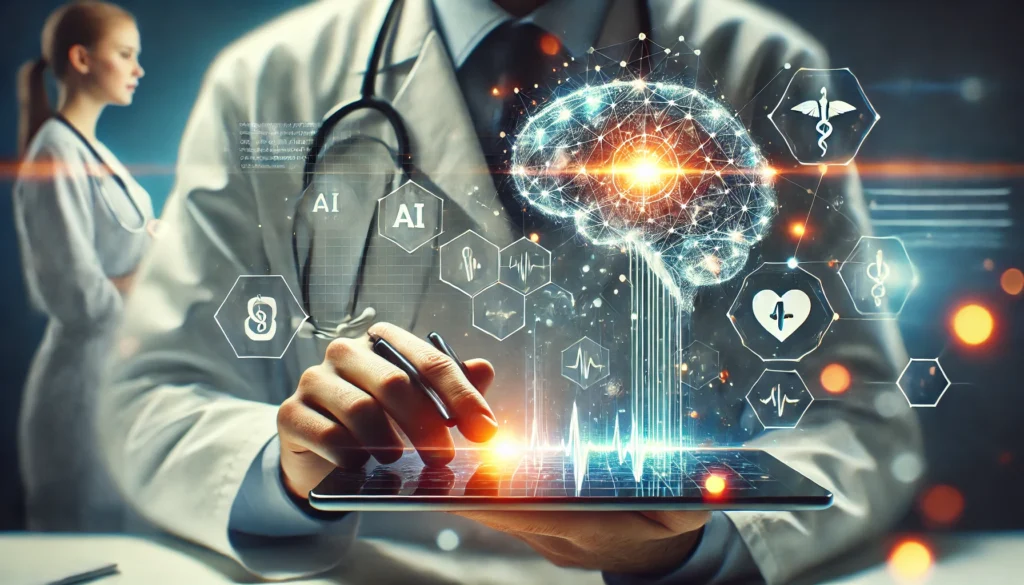
Artificial Intelligence (AI) is transforming healthcare, offering solutions that improve patient care, enhance diagnostic accuracy, and optimize treatment plans. By leveraging vast amounts of data and advanced algorithms, AI is revolutionizing the medical field, making it more efficient and personalized. Here’s a closer look at how AI is reshaping healthcare, from diagnosis to treatment.
1. Faster and More Accurate Diagnoses
AI-powered tools are helping healthcare professionals diagnose diseases earlier and with greater precision.
- How It Works:
AI algorithms analyze medical images, such as X-rays, MRIs, and CT scans, to detect abnormalities like tumors or fractures.- Example: Tools like Zebra Medical Vision and Google DeepMind assist radiologists in identifying conditions like cancer or heart disease with remarkable accuracy.
- Why It Matters:
Early detection significantly improves treatment outcomes and can save lives.
2. Personalized Treatment Plans
AI is enabling tailored treatment approaches based on a patient’s unique needs.
- Applications:
- AI platforms like IBM Watson Health analyze patient data, including genetics, lifestyle, and medical history, to recommend personalized treatment plans.
- Precision medicine, powered by AI, matches patients with the most effective drugs and therapies based on their genetic makeup.
- Impact:
Personalized care reduces trial-and-error in treatments, improving patient outcomes and minimizing side effects.
3. Virtual Health Assistants
AI-driven virtual assistants are transforming how patients manage their health.
- Examples:
- Ada and Buoy Health provide symptom assessments and suggest potential next steps for care.
- Chatbots like Florence remind patients to take medication and track health metrics.
- Benefits:
These tools enhance accessibility, reduce the burden on healthcare providers, and empower patients to take charge of their health.
4. Streamlining Administrative Tasks
AI is automating repetitive tasks, allowing healthcare professionals to focus on patient care.
- How It’s Used:
- Automating medical transcription and coding with AI tools like Nuance Dragon Medical One.
- Optimizing appointment scheduling and resource allocation in hospitals using predictive analytics.
- Why It’s Important:
Streamlining administration improves operational efficiency and reduces burnout among healthcare workers.
5. Drug Discovery and Development
AI accelerates the process of developing new drugs, cutting costs and timeframes.
- How AI Helps:
- Platforms like BenevolentAI and Atomwise analyze chemical compounds to identify potential drug candidates faster.
- AI simulations predict how drugs interact with the human body, reducing the need for extensive lab testing.
- Impact:
AI is expediting treatments for diseases like Alzheimer’s and rare genetic disorders.
6. Remote Monitoring and Telemedicine
AI-powered devices and platforms are enhancing remote healthcare delivery.
- Examples:
- Wearables like Fitbit and Apple Watch monitor vital signs, alerting users to potential health concerns.
- Telemedicine platforms use AI to analyze patient data during virtual consultations, providing doctors with actionable insights.
- Benefits:
These advancements increase access to healthcare, especially in underserved areas, and allow for continuous monitoring of chronic conditions.
Challenges and Ethical Considerations
While AI is revolutionizing healthcare, it also raises challenges that must be addressed:
- Data Privacy: Protecting sensitive patient information from breaches.
- Bias in AI Models: Ensuring algorithms are trained on diverse datasets to avoid discriminatory outcomes.
- Human Oversight: Balancing AI automation with human expertise to ensure compassionate care.
Addressing these issues will be critical to realizing AI’s full potential in healthcare.
The Future of AI in Healthcare
The role of AI in healthcare will continue to expand, with exciting possibilities such as:
- Real-time diagnosis through AI-enabled mobile devices.
- Fully autonomous robotic surgeries guided by AI.
- AI tools predicting pandemics by analyzing global health data.
As AI evolves, it promises to make healthcare more accessible, precise, and efficient, transforming patient care for the better.
Conclusion
AI is reshaping healthcare in profound ways, from early diagnosis and personalized treatment to improved operational efficiency. While challenges remain, the potential benefits of AI far outweigh the hurdles, offering a future where healthcare is smarter, faster, and more inclusive.
By combining AI with human expertise, we can build a healthcare system that saves more lives and improves quality of care globally.