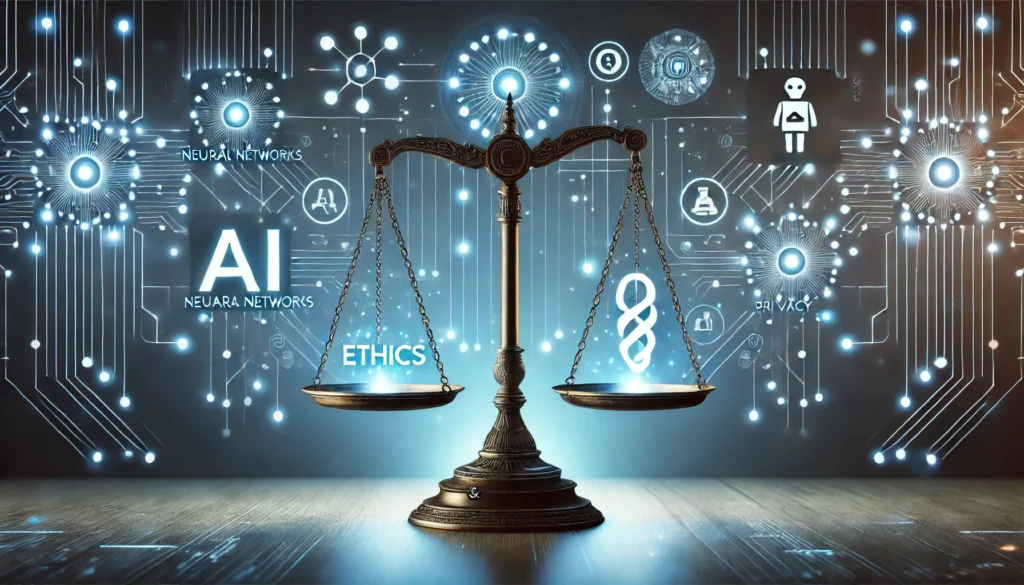
Artificial Intelligence (AI) is reshaping industries and revolutionizing our lives, but with great power comes great responsibility. As AI becomes increasingly integrated into society, ethical concerns around bias, privacy, and job automation have sparked intense debate. Let’s dive into these critical issues and explore how we can navigate the challenges responsibly.
1. Bias in AI: When Machines Reflect Human Prejudices
AI systems are only as unbiased as the data they’re trained on. Unfortunately, this means that biases present in historical or incomplete data can influence AI outputs, often leading to unintended consequences.
Examples of Bias in AI:
- Facial Recognition: Studies have shown that some facial recognition systems have higher error rates for people of color due to biased training datasets.
- Hiring Algorithms: AI used for recruitment can reinforce gender or racial biases if historical hiring data reflects discrimination.
Addressing the Problem:
- Diverse Data: Collecting and curating diverse datasets can help reduce biases in AI systems.
- Transparency: AI developers need to make their algorithms transparent so they can be audited for fairness.
- Ethical AI Teams: Involving ethicists, sociologists, and diverse voices in the development process ensures broader perspectives.
2. Privacy: Who Controls Your Data?
AI systems often rely on vast amounts of personal data to function effectively, raising serious concerns about how that data is collected, stored, and used.
Key Privacy Issues:
- Data Collection: Many AI-powered tools, such as smart devices or apps, collect data without fully informing users.
- Surveillance Concerns: AI-driven surveillance, like facial recognition cameras, can infringe on individual privacy.
How to Protect Privacy:
- Stronger Regulations: Governments need to establish robust privacy laws, like the General Data Protection Regulation (GDPR) in the EU, to safeguard user data.
- User Consent: Companies must prioritize transparency and obtain clear consent before collecting personal information.
- Privacy-Enhancing Tech: Innovations like federated learning allow AI to train on decentralized data, minimizing privacy risks.
3. Job Automation: Will AI Take Our Jobs?
AI’s ability to automate tasks is both a promise and a concern. While automation can improve efficiency and reduce costs, it also raises fears about widespread job displacement.
Industries Most Affected:
- Manufacturing: Robots have replaced repetitive assembly line tasks.
- Customer Service: AI chatbots are handling routine customer inquiries.
- Transportation: Autonomous vehicles could disrupt trucking and delivery jobs.
Balancing Automation and Employment:
- Upskilling Workers: Governments and businesses need to invest in reskilling programs to help workers transition to new roles created by AI.
- Job Creation: While some jobs are lost to automation, AI creates new opportunities in fields like data science, AI development, and robotics.
- Collaboration, Not Replacement: Emphasizing AI as a tool to augment human work, rather than replace it, can reduce fears of job loss.
4. The Path Forward: Ethical AI Development
To address these challenges, we need to establish clear guidelines for ethical AI development.
Key Principles for Ethical AI:
- Accountability: Developers should take responsibility for the potential impacts of their AI systems.
- Inclusivity: Involving diverse voices in AI design ensures more equitable outcomes.
- Transparency: Making AI decisions explainable helps build trust and understanding.
Organizations like OpenAI and the Partnership on AI are working toward creating ethical frameworks for AI development, but there’s still much work to be done.
Conclusion: The Future of AI Ethics
AI holds immense potential to improve our lives, but it also brings complex ethical challenges. By addressing bias, protecting privacy, and preparing for job automation, we can harness AI’s benefits while minimizing its risks.
The future of AI depends on thoughtful development, inclusive perspectives, and responsible use. As individuals, businesses, and governments, we all have a role to play in shaping AI for the greater good.