Creativity has long been considered a uniquely human trait, the spark of innovation and artistry that defines cultures and advances societies. But as Artificial Intelligence (AI) generates art, music, and stories, the question arises: can AI be truly creative, or is it merely mimicking human ingenuity? Let’s explore how AI is reshaping creativity, its limitations, and the philosophical debate around artificial imagination.
1. How AI Is Creating Art, Music, and Literature
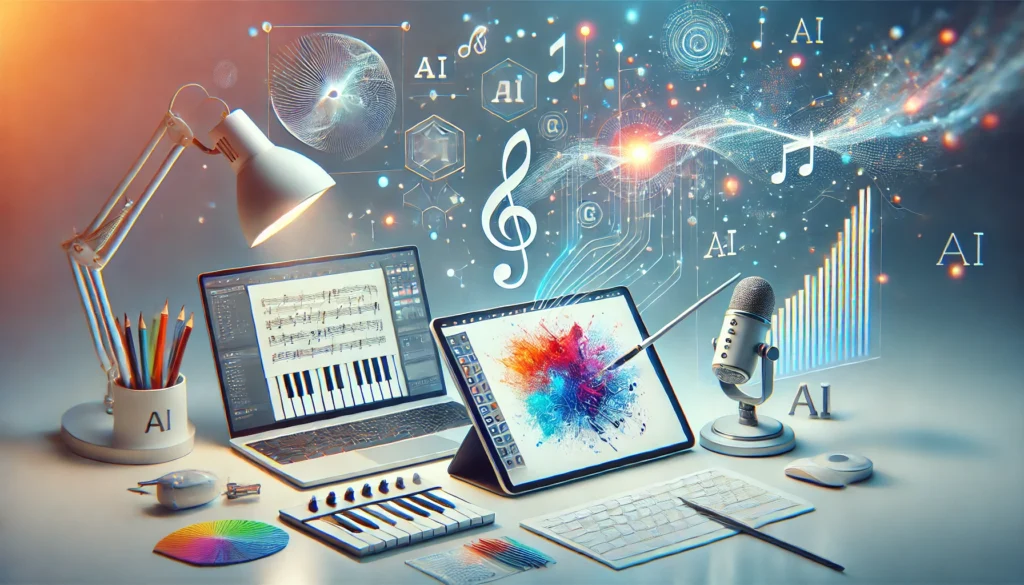
AI is already making waves in creative fields by producing content that rivals human creations.
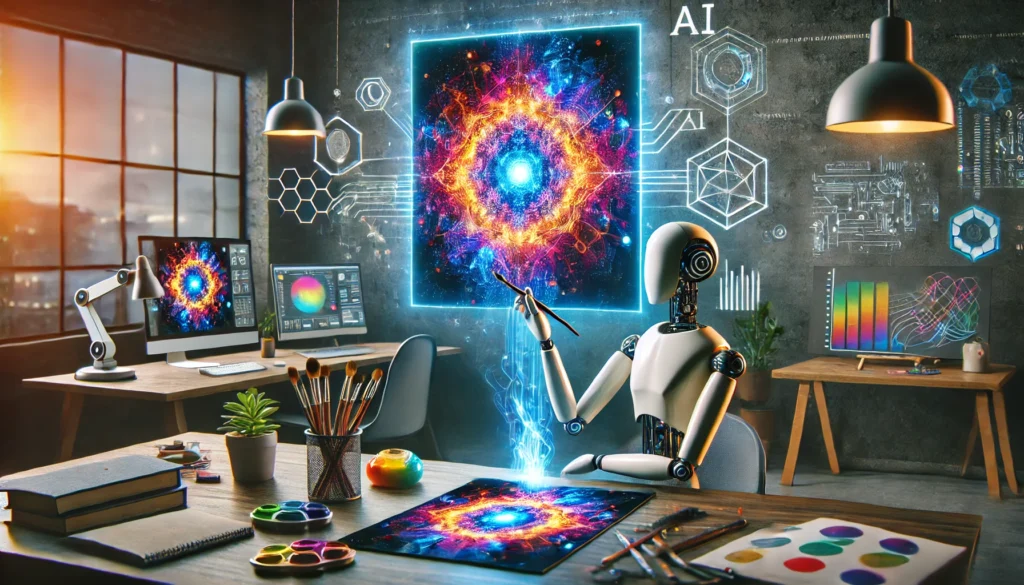
- Art: Tools like DALL-E and DeepDream generate stunning, surreal artwork based on text prompts. AI can mimic famous artistic styles or create entirely new ones.
- Music: Platforms like AIVA compose original pieces in various genres, from classical to electronic, often indistinguishable from human compositions.
- Writing: AI language models, such as ChatGPT, can craft poetry, stories, and scripts, offering a new perspective on creative writing.
The Impact:
AI is democratizing creativity, allowing anyone to experiment with art, music, and writing without traditional training.
2. The Mechanics of AI Creativity
AI doesn’t “think” like humans—it uses algorithms and vast datasets to analyze patterns and generate outputs.
- How It Works:
AI models are trained on massive datasets of existing works, learning to recognize styles, structures, and patterns. When prompted, the AI combines elements from this data to create something new. - Example:
An AI trained on thousands of paintings can generate a unique image by blending different styles, like combining Van Gogh’s brushwork with Picasso’s abstraction.
The Debate:
While AI’s creations are impressive, critics argue that it lacks genuine creativity because it relies entirely on pre-existing inputs.
3. Can AI Truly Be Original?
One of the key challenges in the debate about AI creativity is originality. Human creativity often stems from personal experiences, emotions, and cultural contexts, which AI lacks.
- What AI Does Well:
AI excels at producing variations, combining ideas, and exploring possibilities humans might overlook. - What AI Lacks:
AI cannot create from personal experience, develop new ideas independent of its training data, or understand the emotional resonance of its work.
Example:
An AI-generated painting may be visually striking, but it doesn’t convey the artist’s emotional journey or intention.
4. Collaboration Between Humans and AI
Rather than viewing AI as a competitor, many artists see it as a collaborator.
- Creative Assistants:
AI can suggest ideas, enhance workflows, or inspire new directions. For example, filmmakers use AI to storyboard scenes, and musicians use AI tools to create loops or melodies. - Human Input:
Humans provide the emotional depth, storytelling, and context that AI cannot achieve on its own.
Conclusion:
The most innovative works often arise when humans and AI work together, blending human intuition with AI’s computational power.
5. Ethical Considerations in AI Creativity
AI’s role in creativity also raises important ethical questions:
- Ownership: Who owns AI-generated works—the developer, the user, or the AI itself?
- Authenticity: Can AI creations be considered authentic art if they lack human intent?
- Bias in Training Data: AI can inadvertently replicate biases present in its training data, leading to problematic outputs.
Addressing these questions is essential as AI continues to evolve in creative fields.
6. The Future of AI and Creativity
As AI becomes more sophisticated, its role in creativity will only grow. We can expect:
- Hyper-Personalized Art: AI creating artwork, music, or literature tailored to an individual’s tastes and preferences.
- AI as a Muse: Artists using AI to push the boundaries of traditional creative mediums.
- New Art Forms: Entirely new genres emerging from the interplay between human creativity and AI innovation.
While AI may never replicate the depth of human experience, its ability to augment and inspire creativity is undeniable.
Conclusion: Augmenting, Not Replacing, Creativity
Can AI be truly creative? It depends on how we define creativity. While AI lacks personal experience and emotional depth, it excels at generating ideas, exploring possibilities, and enhancing human creativity. Rather than replacing artists, musicians, and writers, AI serves as a powerful tool to amplify their work.
The future of creativity isn’t about humans versus AI—it’s about how we can collaborate to create something truly extraordinary.